| Tool stack |
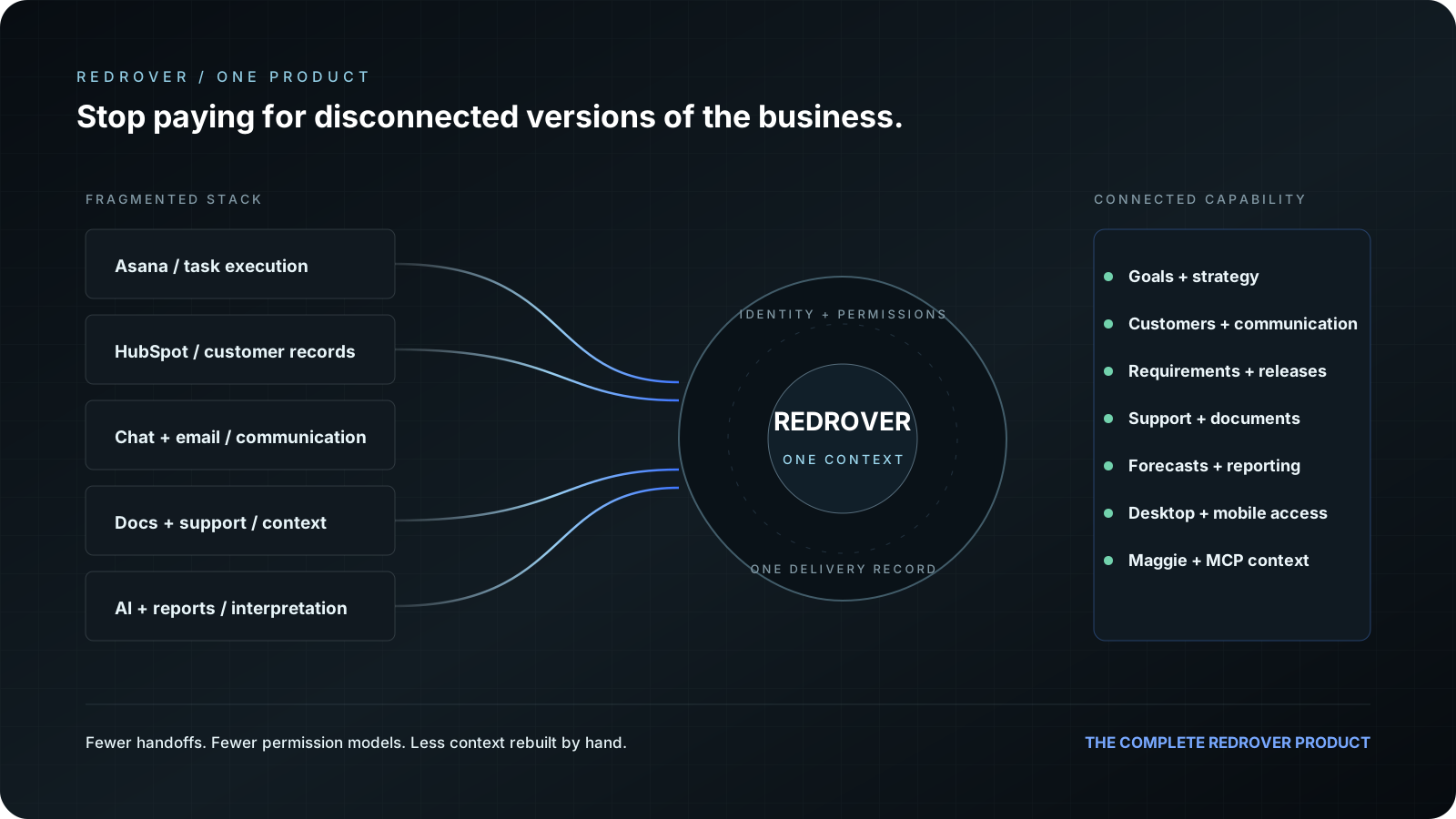
Asana for tasks, HubSpot for customer records, plus separate chat, documents, support, reporting, and AI tools create more subscriptions, integrations, permissions, and places for context to break. |
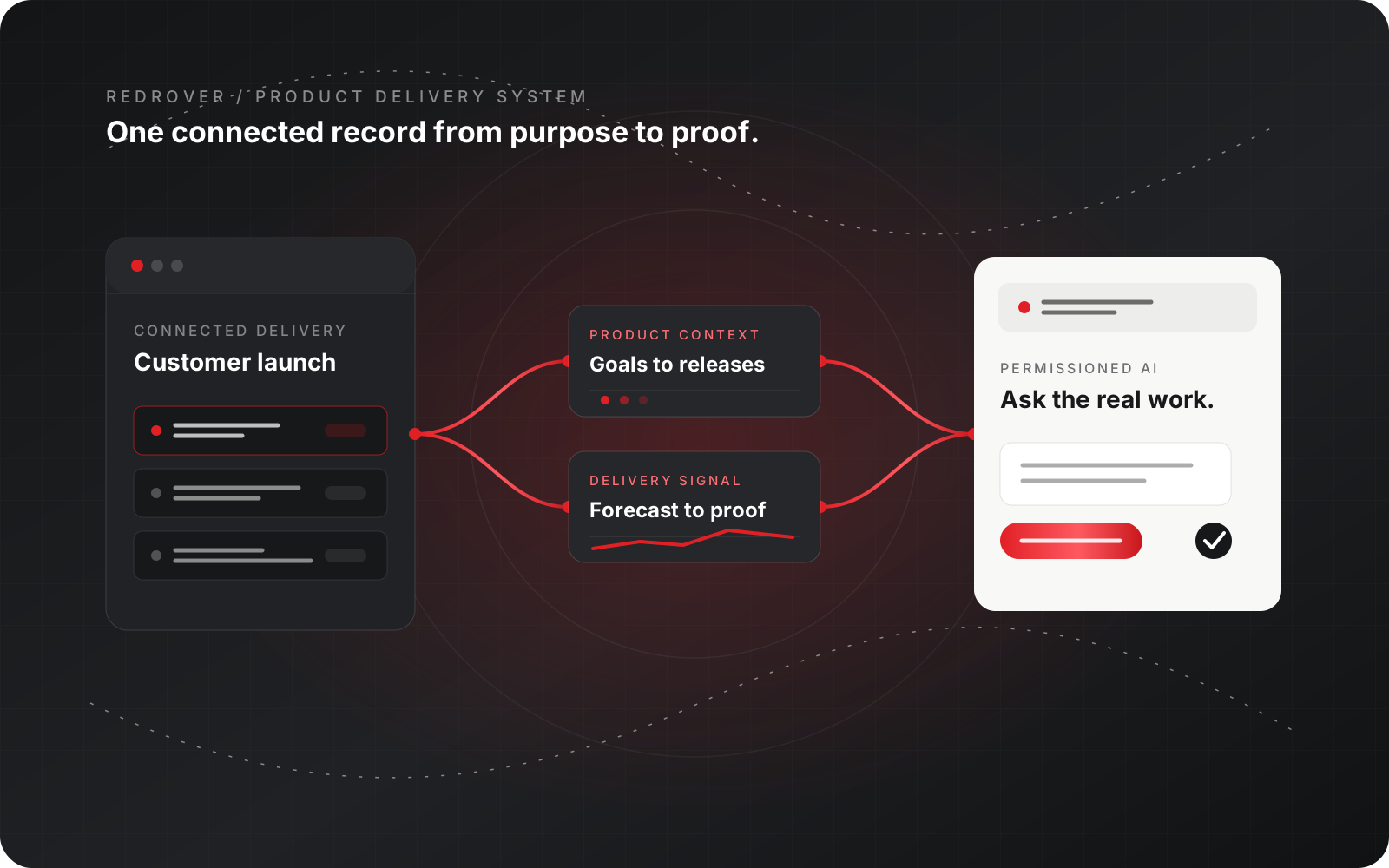
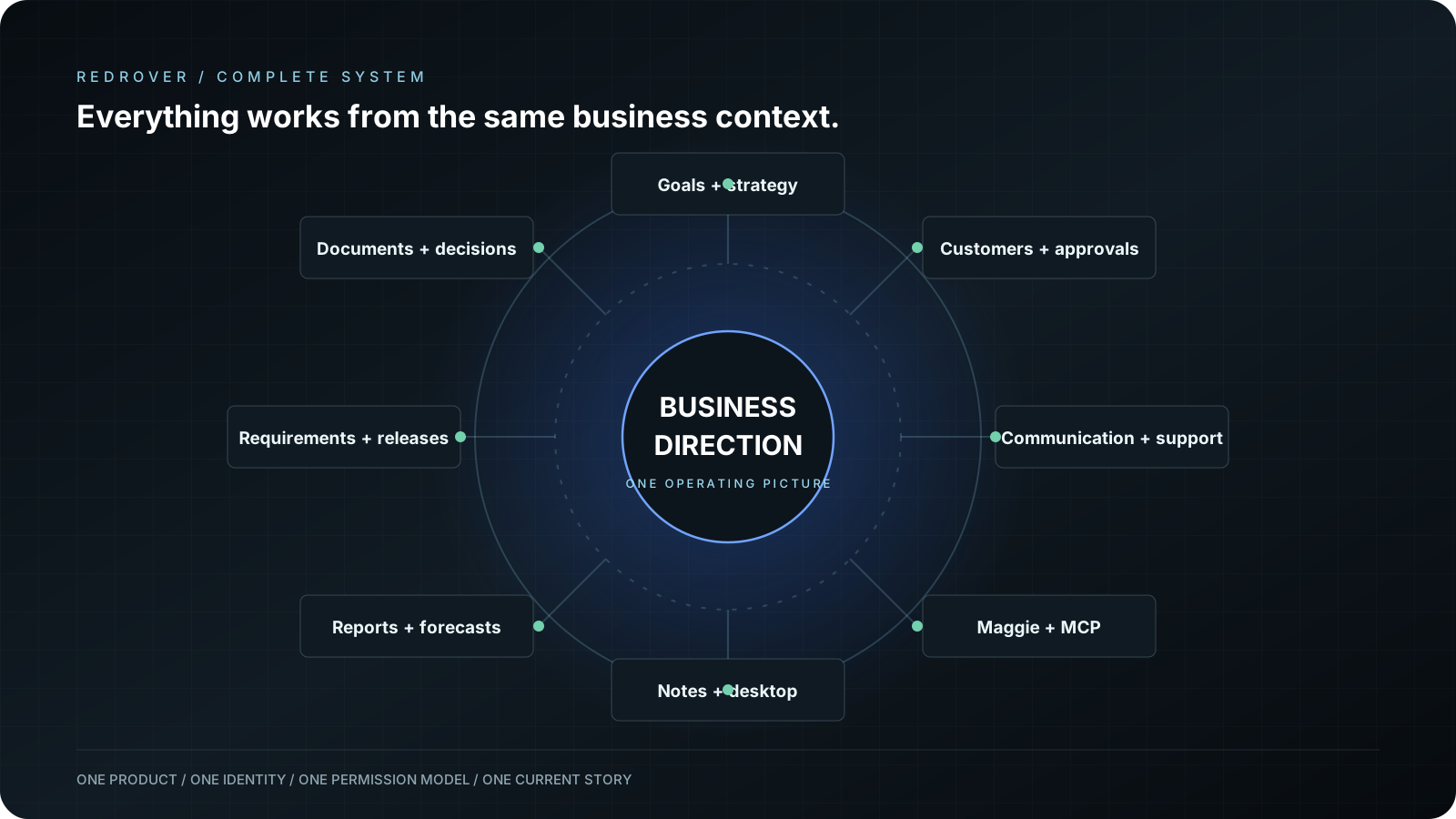
RedRover keeps goals, customers, product decisions, releases, communication, support, reporting, and secure AI context in one connected product. |
| Feature access |
Large software suites often divide capability across plans, seats, hubs, add-ons, and usage tiers. |
Everything RedRover offers is part of one product experience, with the capabilities working together instead of being sold as disconnected modules. |
| Level of focus |
Asana and similar tools organize assignments, due dates, and completion at the leaf level. |
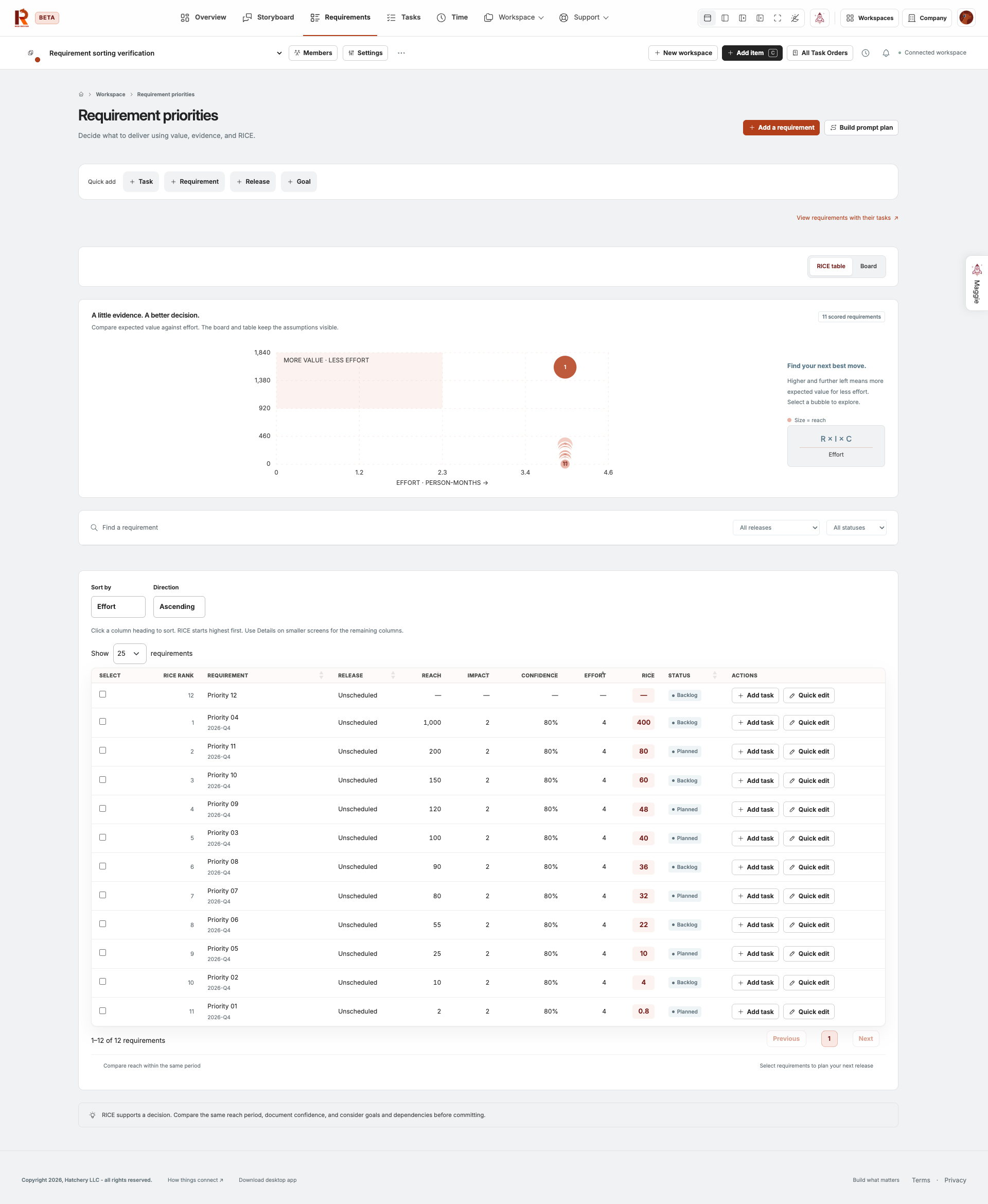
RedRover connects company direction, product decisions, customers, releases, communication, support, and execution into the larger tree. |
| Business visibility |
Executives, product teams, delivery teams, and customers often receive separate summaries assembled by hand. |
Each audience sees an appropriate view of the same permission-aware product and delivery record. |
| Product direction |
Goals can become background documents with weak links to daily work. |
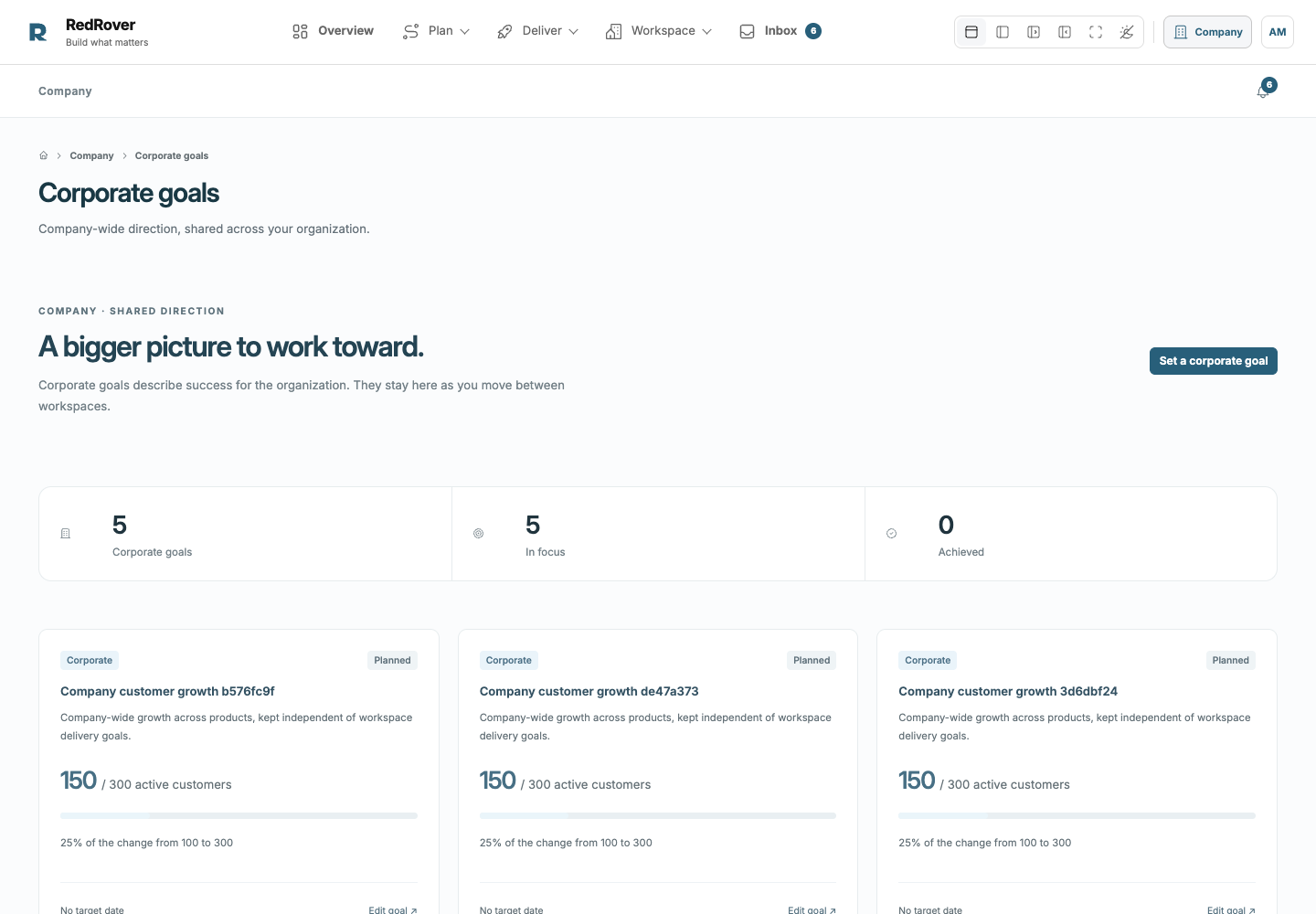
Company and workspace goals remain visible beside requirements, releases, evidence, and outcomes. |
| Delivery |
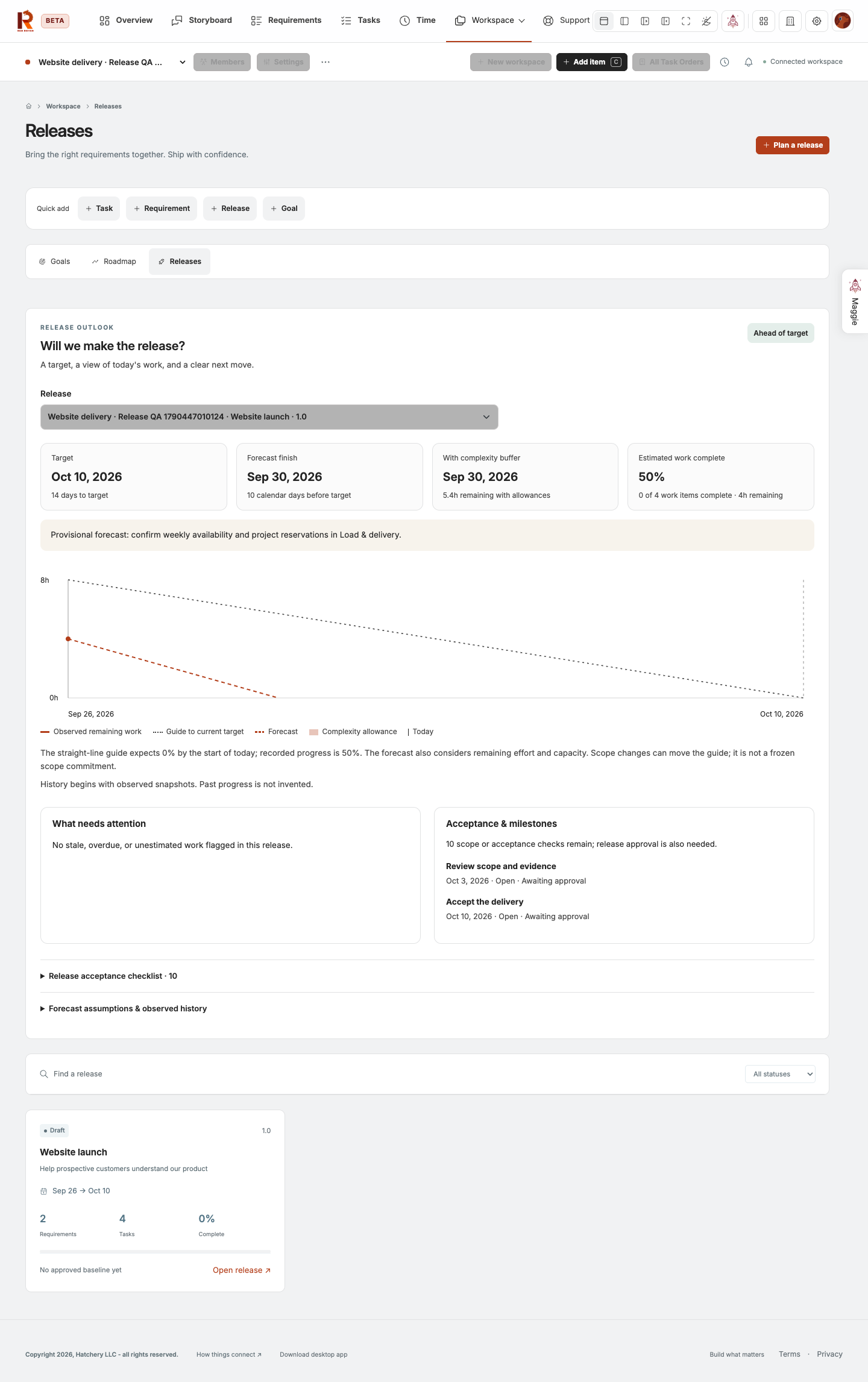
Task status becomes a proxy for progress even when scope, acceptance, capacity, or customer decisions are unresolved. |
Observed progress, forecast assumptions, checkpoints, blockers, acceptance, and customer commitments remain distinct. |
| AI |
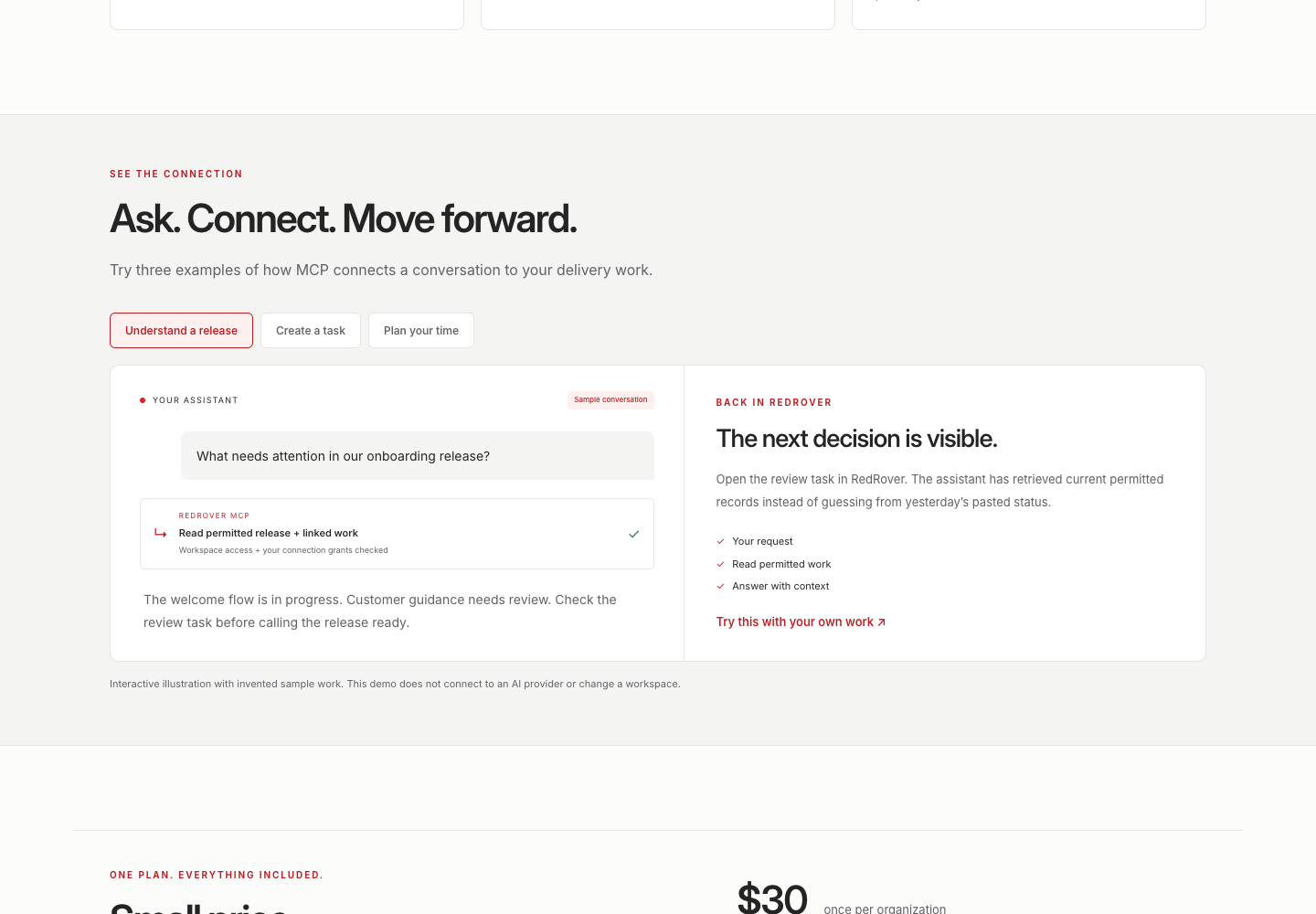
An assistant sees pasted fragments or receives overly broad access. |
MCP and Maggie use permission-filtered business and product context, explicit grants, auditable actions, and human review. |
| Commercial state |
Approval, delivery, payment, and collection are easily separated from the work or conflated with completion. |
RedRover keeps scope, delivery, customer decisions, immutable payment records, and collection boundaries connected but distinct. |