What are you looking for?
Volume, diameter, height, material, neck finish, and closure details help shape a useful product search.

A technical team dedicated to Taral. Consistent people who care, listen, and want to help. After a year-plus BigCommerce effort had not delivered the Acumatica integration Taral needed, Hatchery delivered the connected platform in two months from the start—and continues working with Taral on what comes next.

Taral works with a dedicated technical team that cares about the customer. Consistent humans who listen, understand the history, and really want to help. That continuity carries the work from a difficult ERP integration into everyday operations and the next stage of growth.
The technology matters. The people who stay with the problem make it work.
Meet Tara, Taral's tiger with a talent for finding jars. Tell her what you have in mind, explore related options, and discover product families that fit your needs. Behind that friendly face is growing product knowledge, with Taral's experts helping her get better.

Taral is about quality and precision. Finding jars and collections of jars takes math-intensive, precise product discovery: measurements, units, dimensions, and product relationships working together. Tara makes that depth approachable.
Volume, diameter, height, material, neck finish, and closure details help shape a useful product search.
Tara connects product facts and technical knowledge to help you explore related jars, sizes, materials, and styles.
Refreshed data and curated knowledge expand what Tara can draw on. Product fit still depends on verified specifications.
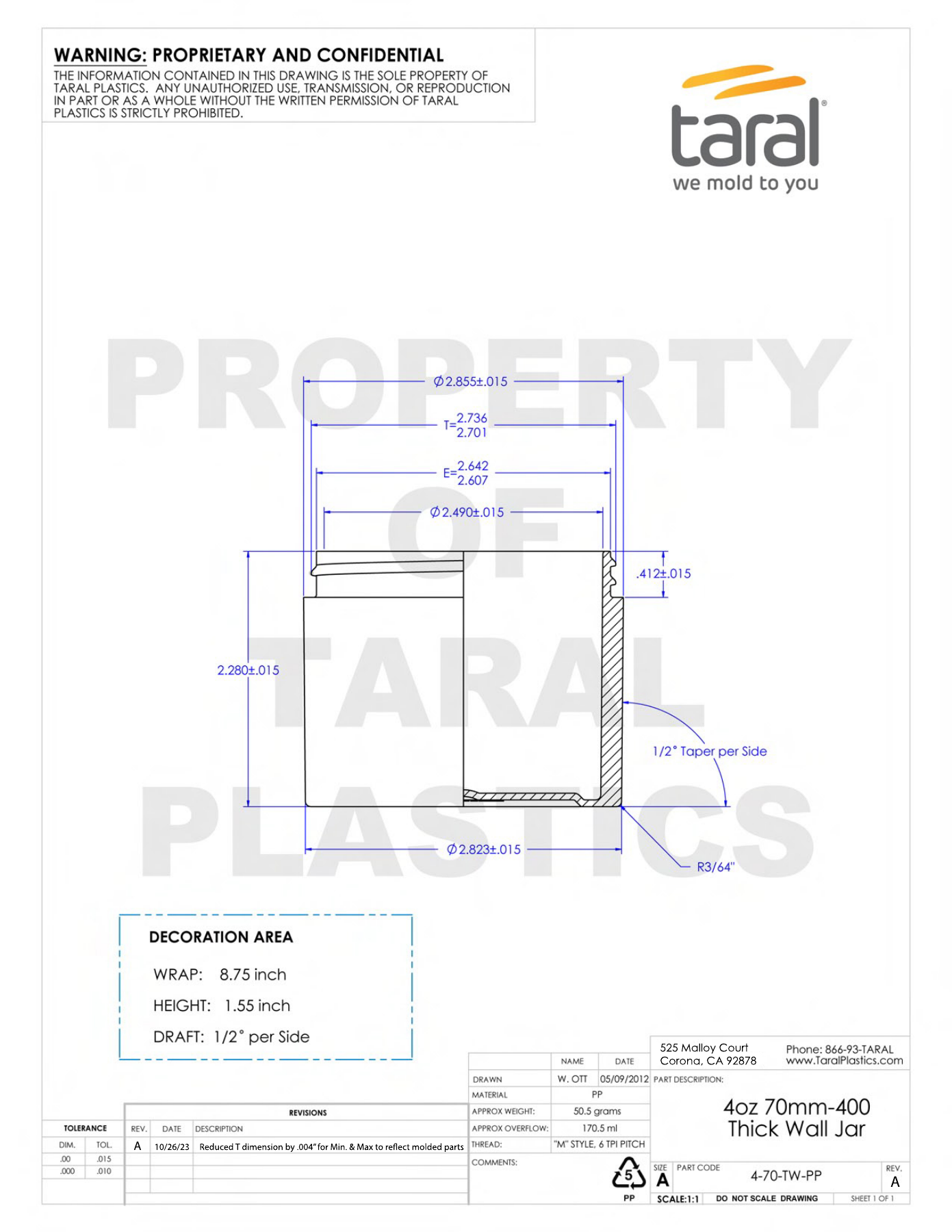
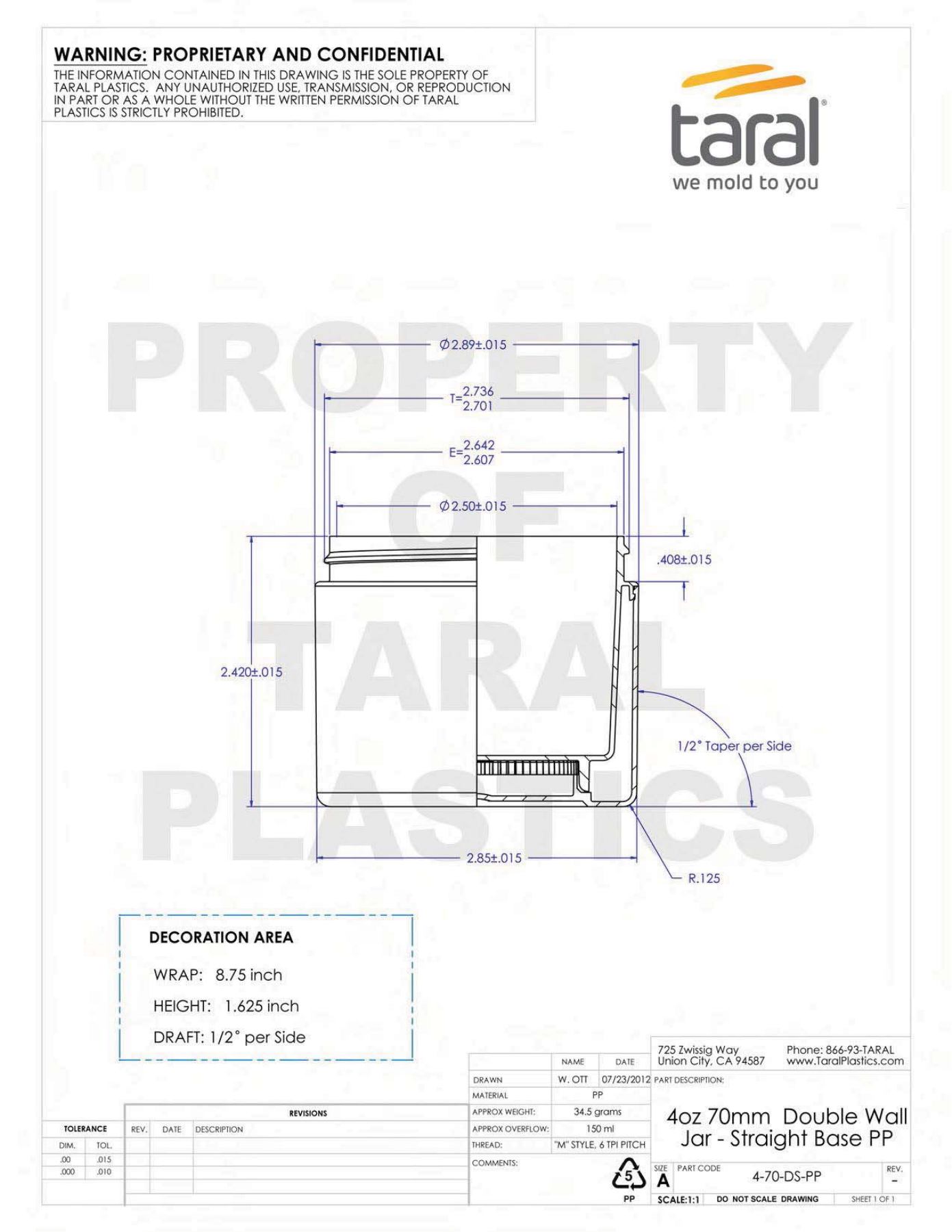
Diameter, thread dimensions, wall construction, tolerances, and decoration areas: these are the real product details behind packaging decisions. These published Taral drawings show the technical depth that can enrich Tara's indexed knowledge.
Taral’s account of the prior engagement is clear: a BigCommerce effort ran for more than a year without delivering the Acumatica integration the business needed. The challenge reached beyond publishing a catalog. Product definitions, inventory, packaging relationships, and sample operations had to work together.
Capacity alone does not tell a customer whether a jar fits the need. Diameter, height, neck finish, wall construction, material, color, closure, liner, and unit of measure all matter. A storefront that flattens those details leaves the hardest decisions to customers and staff.
Taral can work directly with consistent people who care about the business and want to help. That continuity gives the technical work its direction: understand the real operating needs, work through the difficult integration and packaging rules, and keep improving the same connected system together.
Strategy, design, code, integrations, infrastructure, and operations move together so the product can launch and keep serving customers.
Product and inventory data connect through Taral-specific mapping and business rules. Integration respects product visibility, units, warehouse context, and the difference between a saved request and an ERP order.
Authorized staff can initiate a refresh, while configured schedules support recurring synchronization. The website uses the synchronized catalog rather than requiring staff to rebuild product records by hand.
Volume and dimensional interpretation help Tara understand packaging questions. Diameter, height, neck finish, material, wall type, and closure details remain product facts—not decorative descriptions. Nominal capacity alone never establishes a fit.
Tara grows through refreshed catalog data, indexed knowledge, and staff-curated additions. Supported PDF line drawings add technical context and connections to product discovery. Here, self-learning means an expanding, evidence-backed knowledge base; engineering compatibility still depends on verified specifications.
A saved sample request enters a durable handoff workflow. Acumatica order and shipment identifiers, warehouse checks, reconciliation, and staff visibility keep the request connected to fulfillment without treating an uncertain remote response as success.
Integrated payments and complex customer-to-shipping models are in development: customer contracts and requirements, delivery relationships, and bulk shipping. These are next steps, separate from the capabilities described above.
Manual and scheduled updates serve different operational needs. A scheduled refresh is not a claim that every ERP field updates continuously.
PDF-derived context complements structured catalog data. It does not replace dimensional verification or turn a suggested relationship into a guaranteed fit.
Persist the customer request, track external identifiers, and reconcile uncertain outcomes. An ERP handoff is distinct from shipment release, invoicing, payment, or completed delivery.
Taral has a purpose-built platform connecting Acumatica, packaging-aware discovery, Tara’s knowledge, and sample operations. New product facts and technical documents can deepen that system over time. Payments and more complex customer and shipping models are the next development chapter.
The result combines Acumatica integration, packaging mathematics, Tara’s growing intelligence, and warehouse sample workflows. Behind those capabilities is a dedicated technical team that stays engaged, remembers the business context, and helps Taral take the next step.
Product facts, packaging math, and supported indexed PDF drawings inform Tara’s growing product knowledge and discovery.

Supported PDF line drawings enrich Tara’s indexed knowledge and help connect technical evidence with product discovery. Artwork illustrates the concept; it is not an application screenshot.
A dedicated technical team that cares about your business. Taral can interact directly with consistent people who listen, learn the details, and want to help. That continuity connects decisions to delivery: the team understands the history, works through the hard problems with the customer, and stays engaged as the system grows. The relationship is the foundation of the technology.
Tara combines intelligent product discovery with a growing body of Taral expertise. Authorized experts can add and refine content, expand product information, and bring supported PDF line drawings into her knowledge base. That means the people who know the products best can make her answers richer and more useful over time. Refreshed catalog data and curated technical knowledge keep that growth connected to the actual business.
A sample request becomes an operational handoff, not just a message in an inbox. The system preserves the customer’s request and product quantities, then connects it to an Acumatica sample-order workflow with delivery details, warehouse checks, and order and shipment references. Staff can follow the handoff, see exceptions, and reconcile uncertain outcomes. Customer intent stays connected to the warehouse work needed to put the right packaging in someone’s hands.
Yes. Authorized staff can manage the key aspects of the platform: product families and SKU details, catalog content and assets, product relationships, Tara’s knowledge and configuration, synchronization, and sample-request oversight. These controls give Taral’s team ownership of daily operations and continued improvement, with access governed by staff roles and permissions.
Taral stands for quality and precision. Finding the right jars or collections of jars calls for math-intensive, precise product discovery: interpreting measurements, normalizing units, and connecting volume, diameter, height, neck finish, material, and style. Those calculations help customers narrow a complex catalog to relevant options and explore related sizes and product families. Phase one focuses on product discovery; the Acumatica work belongs to phase two.
Integrated payments are part of the next stage of work. Hatchery brings experience building payment and recurring-billing systems to the planning and implementation. The goal is to connect the commercial journey with the catalog and customer workflows as Taral grows. Taral’s integrated payments remain in development.
Hatchery is working toward more complex customer-to-shipping models that reflect customer contracts, individual requirements, and bulk-shipping needs. The connected foundation gives that work a place to grow: customer context, product detail, ERP data, and operational workflows can evolve together as Taral’s business requires.
Bring the ERP, the product rules, and the operational complexity. We will work through the connections.